Last updated 2026-08-21
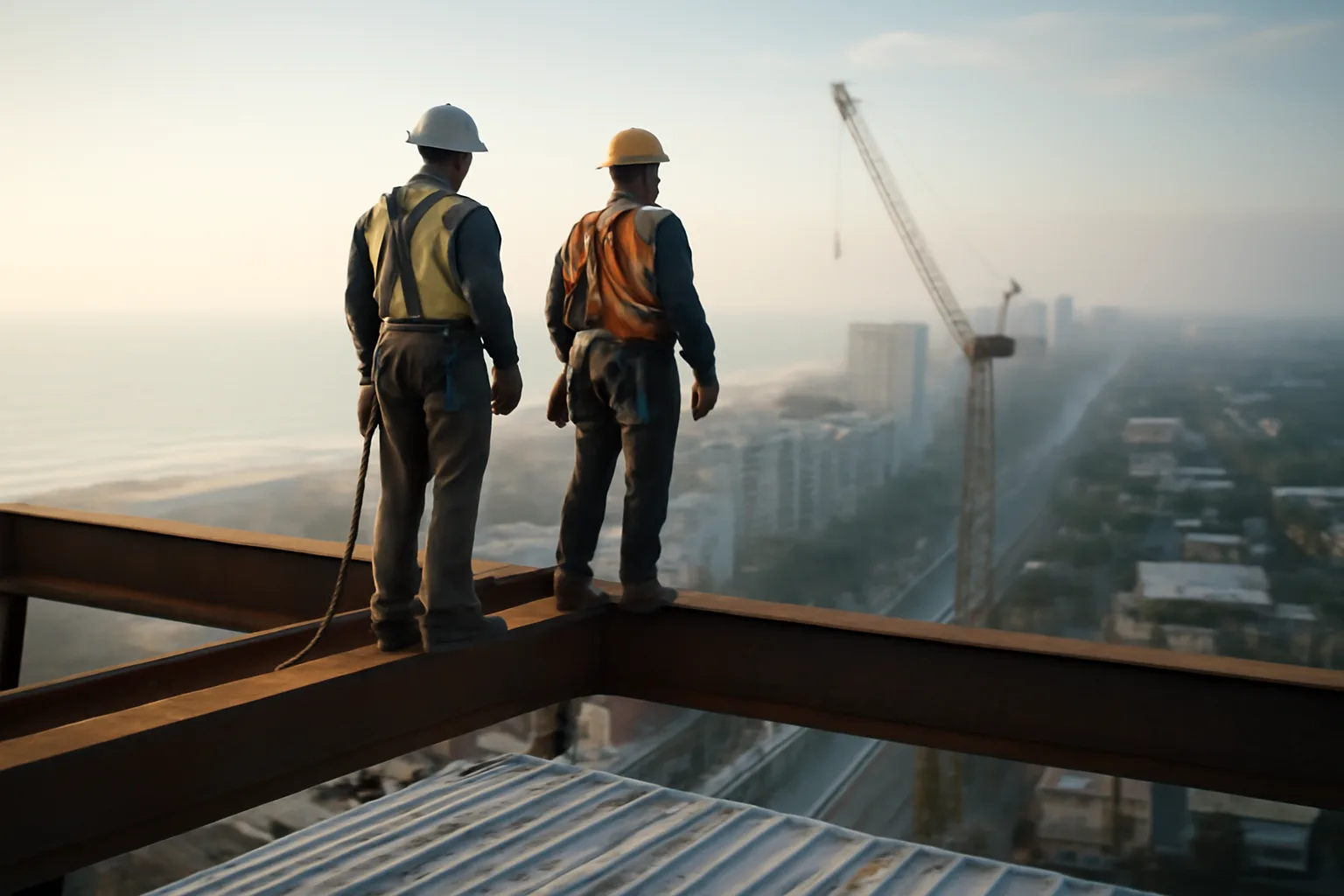
TL;DR
Florida has no ironworker craft board and no statewide journeyman license. Employees work under a licensed contractor. Bidding structural work takes a CILB certification or registration under Chapter 489. Training is usually a 3- or 4-year apprenticeship. Confirm fees and classifications with DBPR. Do not trust anyone who guarantees approval times.
Do you need a license for ironworker in Florida?
You do not need a statewide journeyman ironworker license to work as an employee on Florida steel. Florida has no craft board that cards individual ironworkers. If you bid or contract structural work yourself, you need a Construction Industry Licensing Board credential under Chapter 489. Confirm the live classification list with DBPR before you pay an exam vendor.
Florida splits working the tools from being the contractor. Most new hands sit in the first bucket. A licensed contractor hires you. You show up with safety training, any weld tickets the shop named, and a willingness to learn the raising gang or the deck crew. The state does not sit you down for an ironworker journeyman test.
The second bucket is real license paper. Chapter 489 says a person who wants to contract statewide has to establish competency and get certified, and it blocks unlicensed contracting as a business.[1] That is a contractor path. It is not a craft card. It is the same family of paper a building contractor carries.
If a superintendent asks for your license, they usually mean your employer is licensed and you personally carry site training. Do not confuse that with an electrician-style state journeyman ticket. Florida never built that ticket for ironworkers.
I would not pay a social media ad that promises a Florida ironworker license in two weeks. That product does not exist at the state level. Spend the money on a legitimate OSHA class and a harness you can document.
Is there an ironworker board in Florida?
No. There is no Florida Ironworker Board. The board people actually mean is the Construction Industry Licensing Board inside the Department of Business and Professional Regulation. Florida Statute 489.107 creates that board to carry out the contracting part of the law.[2] It licenses contractors. It does not issue journeyman ironworker cards.
The other offices that feel like a board are the Florida Department of Education apprenticeship unit, which registers apprenticeship programs, and county construction licensing desks in big counties.[8][9] Those offices matter. They still are not an ironworker board.
People search this phrase because other trades have boards, and because neighboring states talk about boards in the same breath as craft cards. Florida's structure is contractor-heavy and craft-light. That is the statute, not a rumor you can work around.
If you are lining Florida up against nearby paper, read the ironworker board in georgia and ironworker board in alabama guides before you copy another state's folder onto a Florida bid. The names sound alike. The statutes do not.
What does the Florida Construction Industry Licensing Board actually cover?
The CILB covers people who bid, pull permits, and take responsibility for construction work. Certified contractors who clear the state path can work statewide. Registered contractors stay inside the counties where they register.[1][12] The board does not decide who is allowed to connect a beam as an employee.
Florida Statute 489.105 defines a contractor, in the part that matters here, as the person who for compensation undertakes to, submits a bid to, or does the work to construct, repair, alter, remodel, add to, demolish, subtract from, or improve a building or structure, with the rest of the definition and the exemptions sitting in that same section.[3] If that is you, you are in CILB territory. If you are on someone else's payroll with a spud wrench, you are not.
Certified status is the statewide card. The statute is blunt: "Any applicant certified under this part may contract throughout the state without being required to fulfill the competency requirements of local jurisdictions."[1] That sentence is why people sit the state exam instead of collecting county tickets one at a time.
Registered contractors are the county-bound version under 489.117.[12] Useful in one market. Painful if you chase work from Jacksonville to Naples.
Specialty classifications change. I will not freeze a structural steel category in this article as if the list cannot move. Confirm the live classification names and the application checklist with DBPR. Boards rewrite rule text. Old blog posts do not.
Experience for certification is not a weekend course. Florida Statute 489.111 makes a person eligible for certification by examination if, among other items, the person has a total of at least 4 years of active experience as a worker who learned the trade, with the qualifying details spelled out in that section.[4] The median annual wage for structural iron and steel workers was $62,760 in May 2023, according to the BLS Occupational Outlook Handbook, which tells you the trade pays, not that the board will rubber-stamp your application.[5]
That 4-year gate is why apprenticeship time and contractor time get mixed up. They are still different pieces of paper.
How do you become an ironworker in Florida without a state craft license?
You get hired, you train, and you collect the tickets employers actually ask for. There is no state craft exam that opens the trade.
The common path is a registered apprenticeship. The BLS Occupational Outlook Handbook says structural iron and steel workers typically need a high school diploma or equivalent and learn on a multi-year apprenticeship clock.[5] Florida registers programs through the Department of Education under Chapter 446.[8][9] Federal registered apprenticeship rules sit on top of that. A registered program is a standard. A weekend certificate is a receipt.
Union halls in Florida run joint apprenticeship programs tied to the International Association of Bridge, Structural, Ornamental and Reinforcing Iron Workers. Nonunion contractors use in-house training, craft modules, or they put you next to a connector and hope you listen. I would pick a registered program if you can get in. The hours are easier to prove later if you ever sit a CILB exam.
Employers will also want construction outreach training, steel erection training the employer must deliver through a qualified person, and welding qualifications to the code the shop uses.[7] AWS D1.1 is the usual structural conversation. The contractor still names the procedure. Add a drug screen and fall gear that is not expired.
None of that is a Florida ironworker license. It is the paper that gets you on the deck.
If you want one folder of what to gather, IronworkerPath sells a $129 one-time Apprenticeship + Cert Kit at /start. It does not replace a registered program or a CILB application. Use it as a checklist. It is not a shortcut and it is not a license.
How long does ironworker take in Florida?
Plan on 3 to 4 years to reach journeyman-level skill if you go the apprenticeship route the BLS describes.[5] That is calendar time plus related instruction, not a Friday-to-Sunday course.
A typical registered apprenticeship pairs roughly 2,000 on-the-job hours a year with classroom time. Classroom hours vary by sponsor. Confirm the related-instruction block with the Florida program that accepts you. Federal registered apprenticeship is a framework, not a single statewide syllabus.[10]
If your goal is a CILB contractor certification so you can bid, Florida's experience statute is at least 4 years of active experience in the relevant work, with the exact qualifying language in 489.111.[4] Passing an exam after four years of carrying bolts is not automatic. The board looks at the kind of experience, more than W-2 dates. Confirm current affidavits and what counts with DBPR. Nobody honest can promise you a processing week.
You can be useful on a Florida deck in a few weeks if you already climb and take instruction. Being useful is not the same as being done. A 40-hour boot camp does not make you an ironworker.
Military steel time and out-of-state hours sometimes count toward apprenticeship credit or contractor experience. That is a file-by-file call. Bring discharge papers and notarized employer letters. Do not assume a hallway conversation equals credit.
How much does ironworker cost in Florida?
There is no single state tuition for becoming an ironworker in Florida, because there is no state craft school you must buy. Costs stack in three piles: training, tools, and (only if you contract) CILB paper.
Union registered apprenticeships often cost you tools, dues, and unpaid night school more than they cost you tuition. Some programs take small weekly training deductions. I cannot quote a live dues number that will still be true next quarter. Ask the local that covers your county.
Nonunion paths can look cheaper on day one. You buy your own outreach class, your own weld tests, and you hope the contractor writes your hours down. That last part is where people get burned.
Contractor-side costs are a separate business. CILB applications, exams, fingerprinting, and the financial responsibility showing the board accepts all cost money. I will not invent the current DBPR fee table. Pull the live fee from the board's checklist. Fees move.
Tools are the cost first-year hands forget. A starter connector kit (belt, spud wrenches, sleever bar, bull pin, tape, PPE, boots) can run from a few hundred dollars to well over $1,000 if you buy new name-brand fall gear. Buy used wrenches. Do not buy used fall protection.
Wage-wise, use published federal numbers and then check the Florida cell. The median annual wage for structural iron and steel workers was $62,760 in May 2023, according to the BLS Occupational Outlook Handbook.[5] National percentile and mean figures for SOC 47-2221 sit on the OEWS occupation table.[14] Florida rows on that survey often sit under the U.S. median. Read the current line before you budget a truck payment.
For a feel of how the same piles look in other markets, see What ironworker cost in Arizona looks like for new hands, Ironworker cost in California and what you actually pay, and Ironworker cost in Virginia.
Waste of money: a license mill selling a Florida ironworker journeyman card. That card is fiction. Buy a real weld test instead.
What paper do Florida ironworkers actually carry on a job?
On a serious Florida steel job you will be asked for identity, proof your employer has the insurance the site requires, construction outreach training, site orientation, and any weld quals that match the spec. Some owners want a written steel erection training record.
OSHA's steel erection standard applies to Florida private construction the same way it applies in other OSHA states. Subpart R "sets forth requirements to protect employees from the hazards associated with steel erection activities involved in the construction, alteration, and/or repair of single and multi-story buildings, bridges, and other structures where steel erection occurs."[6]
Training is not a suggestion. 29 CFR 1926.761 says the training required by that section shall be provided by a qualified person.[7] Keep a copy. Superintendents lose files. Fall protection rules in 1926.760 sit right next to that training duty.[11]
I would also keep your apprenticeship indenture or completion letter, any craft transcripts, a simple log of hours by task (connecting, decking, rebar, ornamental, welding), and fall protection user training. That hour log is boring. It is gold when you later fill a 489.111 experience affidavit.[4]
Do not laminate a fake journeyman card. A competent superintendent will ask who issued it. You will not like the next five minutes.
Do you need a contractor license to bid structural steel in Florida?
Yes, if you are the person contracting for the work. Employees do not bid. Contractors do.
If you form an LLC, hang a sign, and offer to erect steel for compensation, you have stepped into Chapter 489. Unlicensed contracting is not a cute startup story. 489.127 sets prohibitions and penalties for contracting without the proper certification or registration.[13]
Pulling a permit is the bright line a building department understands. The contractor of record is the licensed person. You cannot hide behind a friend's general contractor number if you are the one actually contracting. Officials have seen that trick.
Which CILB classification fits a steel erection company is a scope question. A certified general contractor can take many kinds of building work. A specialty classification, if one matches your exact scope, can be narrower to qualify for and narrower to work under. Confirm with DBPR, and talk to a Florida construction lawyer before you bid a hospital canopy. This site is not a law firm.
A city business tax receipt is a cashier-window item on top of CILB. It is not a substitute for Chapter 489 paper.
What OSHA rules hit Florida steel work the hardest?
Subpart R is the rulebook you will live in. Connecting, controlled decking zones, hoisting and rigging, column anchorage, and double connections are where people get hurt and where citations get written.[6][7][11] Read the standard. Do not wait for a safety guy to paraphrase it in a trailer.
Florida heat is the other problem the steel standard does not fully carry. Water, shade, and a crew that will stop a hero in July matter as much as a tie-off plan. Treat heat like a job hazard, not a personality test.
Do not buy a cheap harness off a random marketplace listing. If you cannot document the standard it meets, it is a costume.
Site-specific erection plans show up on bigger Florida jobs when the engineer of record is paying attention. Your contractor owns that plan. Read it anyway. The plan will not catch you if you never opened it.
Is union apprenticeship or nonunion hiring the better Florida path?
Both exist. Union joint programs are the structured door in South Florida, Tampa Bay, Orlando, and Jacksonville when the work is there. Nonunion fabricators and erectors hire steadily on warehouses, tilt-wall, and smaller structural jobs.
I would apply to every registered program that will take your application, union or not. Registration through Florida's apprenticeship office is the quality filter.[9][10] A contractor who will not write your hours down is wasting the four-year window you may later need for CILB paper.[4]
Travel is part of ironworker Florida reality. A Miami high-rise boom and a Panhandle lull can sit in the same year. Ask about out-of-area work before you count on local overtime.
If a hall will not return your call for a month, keep working and keep applying. Sitting on the couch waiting for a perfect indenture is how people lose a year.
What do local Florida counties add on top of the state?
Certified statewide contractors already cleared the local competency hurdle under 489.113.[1] You may still need to register the company, pull permits, and pay local fees. That is normal. It is not a second journeyman exam.
Miami-Dade, Broward, and some other large counties have historically run their own contractor qualifying desks for people who are not statewide certified. Those lists change. Call the county construction licensing section and ask whether your exact scope needs a local certificate of competency. Do not trust a forum post from 2017.
Municipalities also issue business tax receipts. Bring the corporate papers and a check. Leave the welding hood in the truck.
If you work storm recovery after a hurricane, watch temporary permitting rules and unlicensed-contracting sweeps. Storm work is where investigators have easy cases. Keep your CILB status clean before you chase debris money.
What mistakes waste the most time on the Florida paper path?
Mixing up a city business tax receipt with a CILB license. Paying for a fake state ironworker license. Throwing away pay stubs and hour logs you will need for 489.111.[4] Taking a weld test to the wrong code. Assuming an out-of-state contractor license ports in automatically.
Florida certification is its own exam and application unless a specific endorsement or reciprocity process applies to your file. Confirm with DBPR. I would not bid a Florida job on an out-of-state wall license and a hope.
Skipping Subpart R training records because someone at the gate waved you through is another quiet problem.[7] The citation arrives later.
Buying every tool in the catalog in month one is a waste. You need a belt, wrenches, PPE, and a ride. The rest can wait until a foreman actually sends you to that task.
Looking at the ironworker board in california write-up is useful only as contrast. California's structure is not Florida's. Copying it will make a mess of your folder.
What should you do first if you want to start this year?
Call two or three Florida contractors who actually erect steel and ask how they hire helpers. Apply to registered apprenticeship sponsors listed through the Florida Department of Education apprenticeship office.[9] Get a construction OSHA-10 from a legitimate outreach trainer. Start a paper folder the first week, not the week you decide you want a contractor exam.
If your real goal is to own the company, read 489.105, 489.111, and 489.113 yourself, then request the current CILB application checklist from DBPR.[1][3][4] Do not start bidding while you are still guessing the classification.
IronworkerPath is an independent publisher, not a law firm and not a placement service. The $129 Apprenticeship + Cert Kit at /start is optional paper organization. Confirm every fee, form, and classification with the board that issues it. No article can honestly guarantee approval or timing.
Frequently asked questions
Do you need a license for ironworker in Florida?
Not a statewide journeyman ironworker license. Employees work for a licensed contractor without a state craft card. If you bid or contract structural work, you need CILB certification or registration under Chapter 489. Confirm the classification that matches your scope with DBPR before you apply or advertise.
How much does ironworker cost in Florida?
There is no state tuition. Union apprenticeships often cost tools, dues, and time more than tuition. Nonunion paths add outreach classes and weld tests you pay yourself. Contractor exams and financial responsibility are extra and must be confirmed with DBPR. A starter tool and PPE kit often runs a few hundred dollars to over $1,000.
How long does ironworker take in Florida?
A typical path is a 3- to 4-year apprenticeship, which is the training length the BLS describes for structural iron and steel workers. CILB contractor certification by examination generally needs at least 4 years of qualifying active experience under Florida Statute 489.111. Confirm what hours count with the program sponsor and with DBPR.
Does Florida give a journeyman ironworker exam?
No. Florida does not run a statewide journeyman ironworker exam or issue a craft card for the trade. The state exam people mean is the CILB contractor examination for people who want to contract. Job sites still ask for safety training and weld qualifications. Those come from trainers and the employer, not from an ironworker board.
Is the CILB the ironworker board in Florida?
It is the closest state board, and it is not an ironworker board. Florida Statute 489.107 creates the Construction Industry Licensing Board inside DBPR to carry out contractor licensing. It credentials businesses and qualifying agents. It does not card individual connectors, rod busters, or ornamental hands working as employees.
Can I use an out-of-state contractor license on Florida steel?
Do not assume it ports. Florida certification is its own application and exam unless DBPR has an endorsement or reciprocity process that actually fits your license. Registered county status is even more local. Confirm with DBPR before you bid. Bidding on an out-of-state wall license is how unlicensed contracting cases start.
Do I need OSHA 10 to work ironworker jobs in Florida?
Many Florida sites treat OSHA-10 construction outreach as the floor, and some owners want OSHA-30 for leads. Separate from that, OSHA 1926.761 requires steel erection training by a qualified person. Carry both the outreach card and the Subpart R record your employer should give you. Confirm the site spec. Do not buy a fake card.
Who registers ironworker apprenticeships in Florida?
The Florida Department of Education handles registered apprenticeship programs under Chapter 446, on top of the federal registered apprenticeship framework. Union joint programs and some nonunion sponsors use that system. Ask whether the program is actually registered before you count the hours toward later contractor paper.
Can I start a steel erection company with only a union book?
No. A union book or journeyman status is craft standing with a hall or employer. Contracting in Florida still needs CILB certification or registration in a proper classification under Chapter 489. Unlicensed contracting has statutory penalties. Get the contractor paper, insurance, and financial responsibility in order before you bid.
How much do structural ironworkers make?
The U.S. median annual wage for structural iron and steel workers was $62,760 in May 2023, per the BLS Occupational Outlook Handbook. Florida OEWS estimates for SOC 47-2221 are published separately and often sit below that national median. Overtime, travel, and welding tickets swing take-home hard. Read the current BLS tables, not a recruiter's best week.
Does Miami-Dade or Broward require its own ironworker certificate?
Large South Florida counties have historically run local contractor qualifying for people who are not statewide certified. Those lists and trade names change. A certified CILB contractor already cleared local competency under 489.113, but local registration and permits still apply. Call the county construction licensing desk and ask about your exact scope.
What welding certification do Florida ironworker shops want?
Shops usually want a qualification to the welding procedure they use, often discussed as AWS D1.1 for structural steel. The contractor and the engineer of record name the code and the test. A random certificate from an unknown school may not transfer. Ask the shop which process, position, and procedure they will accept before you pay a booth.
Are reinforcing ironworkers licensed separately in Florida?
Not as a statewide journeyman craft. Rod work is still ironwork on the tools, and it is still contracting if you bid it. Rebar may sit under a different CILB classification than structural erection depending on scope. Confirm the classification with DBPR. Do not advertise a specialty you have not been certified or registered to contract.
Sources
- Florida Senate, Statute 489.113 (2023): Statewide contracting requires board-approved examination and department certification; certified applicants may contract throughout Florida without local competency tests.
- Florida Senate, Statute 489.107 (2023): The Construction Industry Licensing Board is created within the department to carry out the contracting part.
- Florida Senate, Statute 489.105 (2023): Defines contractor as the person who, for compensation, undertakes, bids, or performs construction, repair, alteration, or similar work on buildings or structures, subject to listed exemptions.
- Florida Senate, Statute 489.111 (2023): Certification by examination eligibility includes a total of at least 4 years of active experience as specified in the statute.
- U.S. BLS Occupational Outlook Handbook, Structural Iron and Steel Workers: Median annual wage was $62,760 in May 2023; typical entry is a high school diploma and a 3- or 4-year apprenticeship.
- OSHA 29 CFR 1926.750 Scope: Subpart R sets requirements to protect employees from hazards of steel erection on buildings, bridges, and other structures.
- OSHA 29 CFR 1926.761 Training: Steel erection training required by the section shall be provided by a qualified person.
- Florida Senate, Statute 446.021 (2023): Defines apprenticeship and related terms used in Florida's registered apprenticeship system.
- Florida Department of Education, Apprenticeship Programs: The Florida Department of Education administers registered apprenticeship programs in the state.
- U.S. Department of Labor, Registered Apprenticeship Program: Registered apprenticeship is a structured earn-and-learn model with on-the-job training and related instruction.
- OSHA 29 CFR 1926.760 Fall protection: Sets fall protection requirements for steel erection work under Subpart R.
- Florida Senate, Statute 489.117 (2023): Registered contractors are limited to the local jurisdictions where they register, unlike statewide certified contractors.
- Florida Senate, Statute 489.127 (2023): Sets prohibitions and penalties related to contracting without required certification or registration.
- U.S. BLS OEWS, SOC 47-2221 Structural Iron and Steel Workers: Publishes national and geographic wage and employment estimates for structural iron and steel workers.